Asbestos Removal Cost Guide for Ireland 2026
Navigating the Financial and Regulatory Landscape of Asbestos Abatement and Hazardous Waste Management in the Irish Market.
Book Asbestos Removal1. The Historical Context of Asbestos Use across Ireland
The presence of asbestos in Irish properties remains a significant legacy of twentieth century construction practices. For homeowners and commercial property managers, the discovery of these materials often prompts immediate concern regarding safety and financial liability. As Ireland progresses through 2026, the landscape of asbestos management has been fundamentally reshaped by stringent new regulations and a national drive toward energy efficiency.
Understanding the costs associated with asbestos removal is no longer just about obtaining a quote for labour. It involves a comprehensive understanding of risk assessment, legal compliance, and the logistical complexities of hazardous waste disposal.
To understand the current scale of the asbestos challenge one must look at the building boom periods that defined modern Ireland. Between the 1940s and the late 1990s asbestos was considered a miracle mineral due to its extraordinary tensile strength and resistance to heat and chemicals. It was integrated into almost every facet of construction from social housing projects in Dublin and Cork to massive industrial developments in the Shannon region. The material was frequently used in roof sheets, floor tiles, pipe lagging, and textured coatings like Artex.
Because the general ban on asbestos did not fully take effect in Ireland until 1999, any property constructed or refurbished before 2000 is presumed to contain some form of asbestos containing material. This historical prevalence means that modern renovation projects, particularly those focused on retrofitting for energy efficiency, frequently encounter these hazardous fibres. The transition from a widely accepted building material to a strictly controlled hazardous waste has created a unique set of challenges for the contemporary Irish property market.
The Pre-2000 Property Rule:
Any Irish property constructed or refurbished before 2000 is presumed to contain asbestos materials. A professional survey is essential before any renovation or retrofit begins.
2. Understanding the Mineral Varieties and Their Associated Risks
Asbestos is not a single substance but a group of naturally occurring silicate minerals. In Ireland the most commonly encountered varieties are Chrysotile (white asbestos), Amosite (brown asbestos), and Crocidolite (blue asbestos). Each type possesses different physical characteristics that affect how the material behaves when disturbed and consequently how much it costs to remove.
Chrysotile was the most widely used variety in Ireland, particularly in cement products like roof sheets and water tanks. It belongs to the serpentine group and is characterised by curly fibres. While still highly dangerous, it is often found in bonded formats which are less likely to release fibres unless the material is broken or drilled.
Amosite and Crocidolite belong to the amphibole group and feature needle-like fibres that are exceptionally hazardous when inhaled. These were often used in higher risk applications such as sprayed insulation and thermal pipe lagging.
The physical state of the material is the primary driver of removal costs. Materials are classified as either friable or non-friable. Friable materials are those that can be easily crumbled or reduced to powder by hand pressure — a significant health risk because the microscopic fibres can stay suspended in the air for long periods.
Non-friable materials like floor tiles or cement sheets have fibres bonded into a solid matrix and are generally safer to handle provided they remain intact. The distinction between these states is critical, because friable asbestos requires much more intensive containment and air monitoring protocols, which significantly increases the final quote for removal.
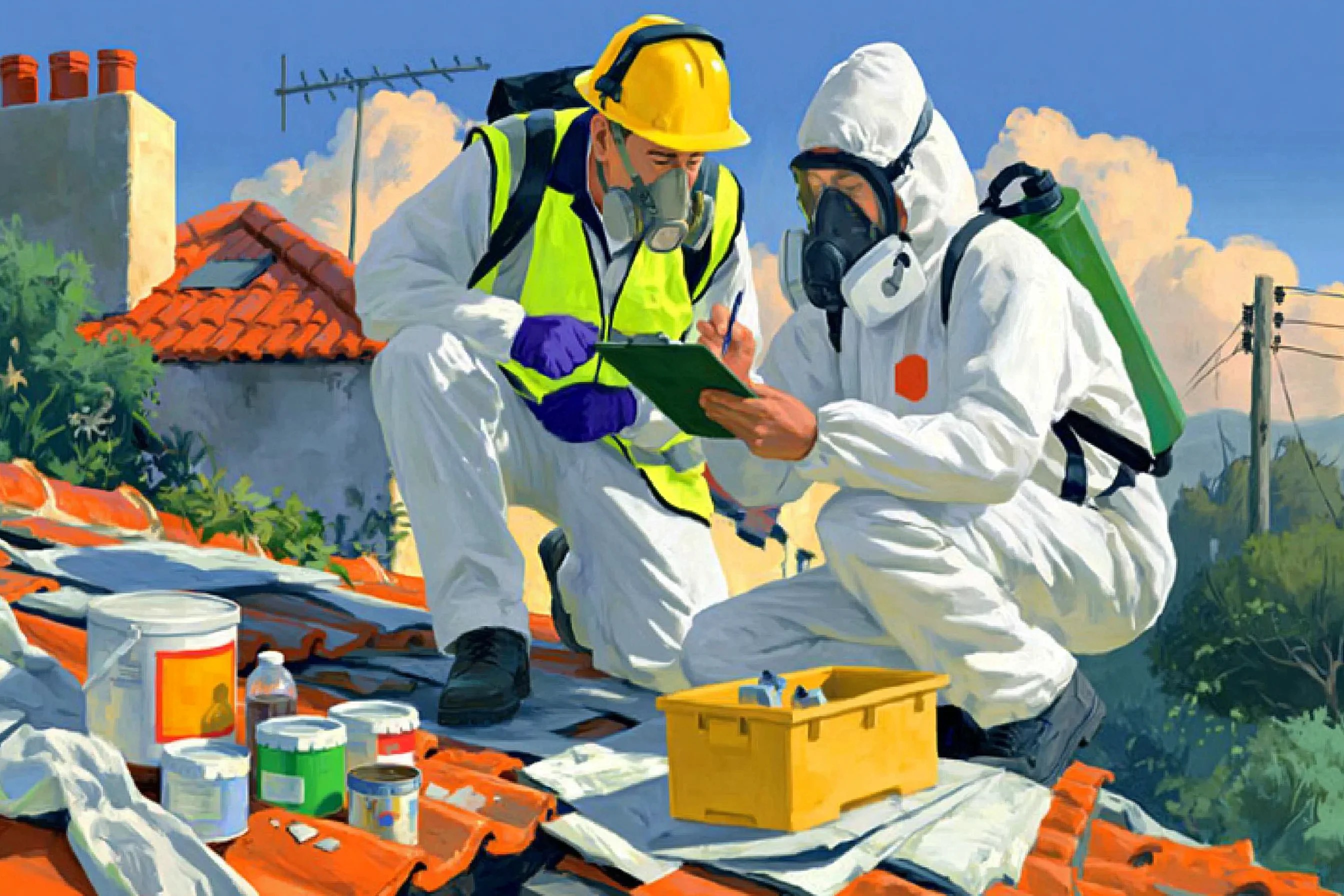
Only a professional survey can confirm asbestos and whether it is friable or non-friable — the key factor driving the cost of removal.
3. The Regulatory Overhaul of 2025 and 2026
The year 2025 marked a watershed moment for asbestos safety in Ireland with the introduction of the Safety Health and Welfare at Work (Exposure to Asbestos) Amendment Regulations 2025. These regulations, together with the new 2025 Code of Practice, have introduced a far more stringent regime for managing asbestos risks in both residential and commercial settings.
A central pillar of this new framework is the dramatic reduction of the Occupational Exposure Limit Value — lowered ten-fold as an eight-hour time-weighted average. Many tasks that were previously considered low-risk or non-notifiable now fall under strict regulatory oversight. Furthermore, the regulations now explicitly require that removal be prioritised over encapsulation or managing in place.
The 2025 regulations also introduced a mandatory permit system that replaces the older notification process. Contractors must now submit a comprehensive plan of work and a site-specific risk assessment to the Health and Safety Authority at least 10 days before commencing work. No work can begin until the authority has issued a unique permit number.
For the property owner, this means that the lead time for projects has become more standardised, and the administrative burden on contractors has increased, which is reflected in modern pricing structures.
Key 2025 Regulatory Changes:
- Occupational Exposure Limit Value reduced ten fold.
- Mandatory HSA permit system replacing notifications.
- 10 day minimum notice period before any work begins.
- Removal prioritised over encapsulation or in-place management.
4. Variables that Determine the Final Quote
The cost of removing asbestos in Ireland is highly variable because no two properties are identical. Several factors influence the complexity and the subsequent price of the project.
| Variable | Influence on Cost | Rationale |
|---|---|---|
| Type of Asbestos | High | Friable asbestos requires full enclosure and negative air pressure systems. |
| Location in Building | Moderate to High | Work at height or in confined spaces like attics increases labour time and equipment needs. |
| Quantity and Volume | High | Disposal fees are often calculated by weight or by the number of hazardous waste bags. |
| Condition of Material | Moderate | Damaged or crumbling material requires more intensive cleanup and air monitoring. |
| Accessibility | Moderate | The need for scaffolding or specialist access equipment adds to the fixed costs. |
| Notification Requirements | Low to Moderate | Administrative fees for HSA permits and local authority waste transfer forms. |
The interaction between these variables means that a simple price per square metre is rarely accurate for interior work. For example removing asbestos vinyl floor tiles from a ground floor room is relatively straightforward. However removing identical tiles from a third floor office with no lift access and deteriorating adhesive will cost significantly more due to the additional labour and the risk of fibre release during the removal of the adhesive.
5. Detailed Cost Benchmarks for the Irish Market in 2026
Market data for 2026 reflects the increased costs of compliance and the rising fees for hazardous waste disposal. While every project requires a site specific survey the following ranges provide a reliable benchmark for budgeting purposes.
| Job Type | Typical Cost Range (Inc. VAT) | Key Considerations |
|---|---|---|
| Residential Management Survey | €330 to €550 | Standard for home sales or pre renovation planning. |
| Laboratory Testing per sample | €50 to €100 | Essential for confirming asbestos presence before starting work. |
| Small Garage or Shed Roof | €770 to €3,000 | Pricing varies based on sheet count and ease of access. |
| Small Bungalow Roof Removal | €8,800 to €27,500 | Includes full strip and disposal of cement sheets. |
| Interior Ceiling Removal per room | €1,650 to €3,850 | High risk if material is friable or damaged. |
| Floor Tile Removal per room | €880 to €2,750 | Includes removal of tiles and potentially contaminated bitumen adhesive. |
| Pipe Insulation Lagging | €50 to €120 per metre | Requires specialist containment and air clearance testing. |
| Contaminated Soil Remediation | €100 to €250 per tonne | Often required for derelict sites or farm redevelopments. |
These figures include the cost of professional labour, specialist equipment like high-efficiency particulate air vacuums, and the mandatory disposal charges at licensed facilities. Many contractors now quote inclusive of VAT, but some commercial quotes may be provided ex-VAT — property owners should always clarify this upfront.
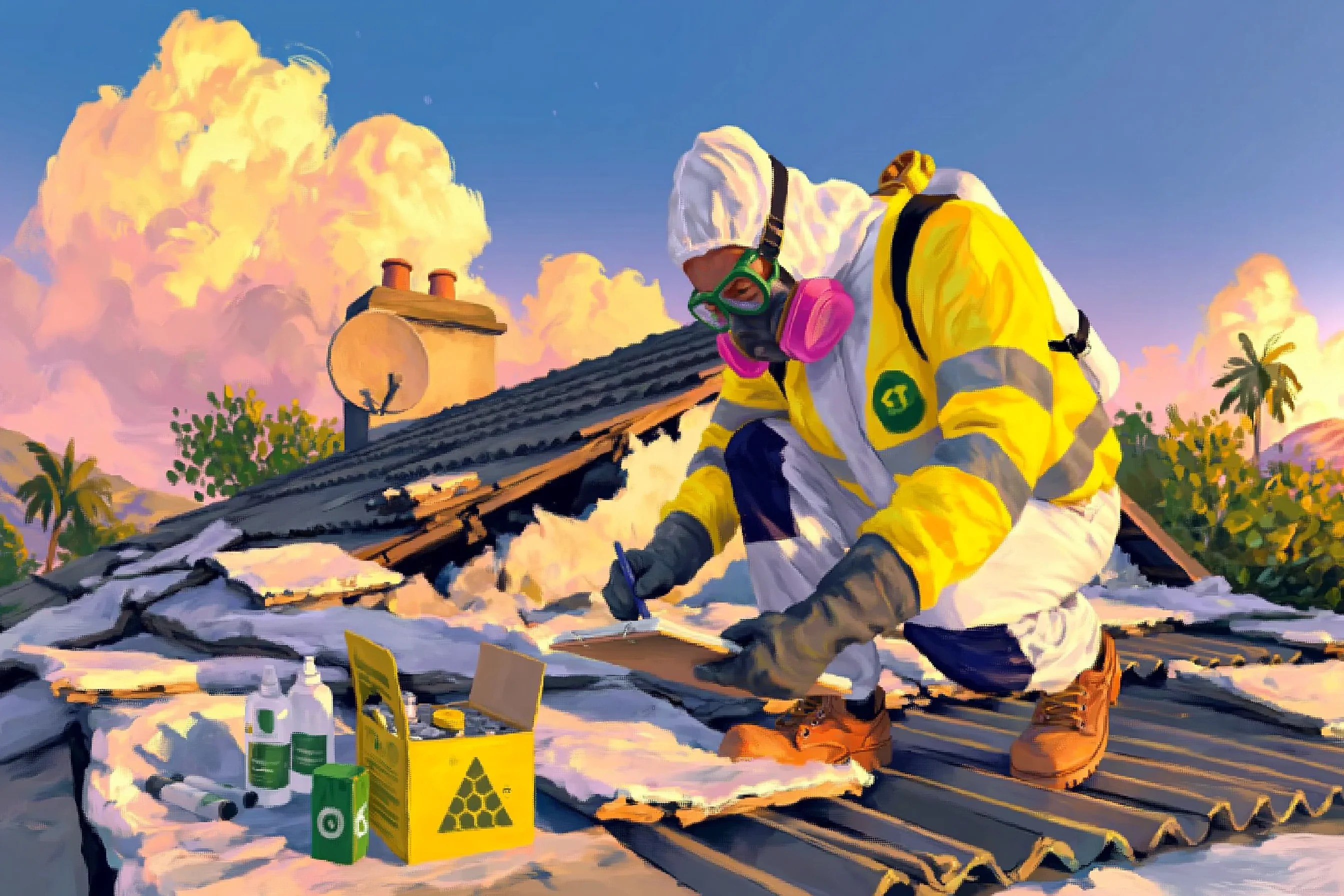
Professional asbestos removal in progress: full PPE, containment sheeting, and certified hazardous waste packaging.
6. The Importance of the Asbestos Survey
A professional asbestos survey is the only way to accurately identify the presence and condition of hazardous materials. In Ireland there are two primary levels of survey. A Management Survey is designed to locate asbestos that could be disturbed during normal occupancy and is the standard requirement for property managers and landlords. A Refurbishment and Demolition Survey is much more intrusive and is legally required before any significant construction work begins.
The cost of a survey is a vital investment in safety. Starting a renovation without a survey can lead to the accidental disturbance of asbestos, which can contaminate an entire property. The cost of cleaning up an accidental release is often ten times the cost of a planned removal.
An accurate survey also allows for competitive tendering because contractors are quoting on a clearly defined scope of work rather than making assumptions that could lead to price hikes later in the project. Professional surveyors collect small samples of material using controlled methods to ensure no fibres are released during the sampling process. The resulting report provides a clear roadmap detailing which materials can be left in place and which must be removed before any work proceeds.
Cost of Inaction Warning:
The cost of cleaning up an accidental asbestos release is often ten times the cost of a planned removal. A €330–€550 survey can prevent project-ending contamination events.
7. Government Grants and Financial Support in 2026
The high cost of asbestos removal is a known barrier to property improvement and energy retrofitting. To address this, several government schemes provide financial assistance. For commercial property owners, the Environmental Protection Agency offers grants intended to support the safe management and disposal of hazardous wastes under the National Hazardous Waste Management Plan.
For residential homeowners, the most significant support comes from the Sustainable Energy Authority of Ireland. Under the Solar PV grant scheme, homeowners can receive a grant of up to €1,800. While this is primarily for solar panel installation, it includes a provision to assist with the costs of removing an asbestos roof if such work is necessary to facilitate the solar installation. In 2026, the government confirmed that these grant levels would remain frozen at their maximum amounts, providing a unique window for homeowners to upgrade their properties while receiving substantial state support.
Additionally, the Department of Education manages a specific Asbestos Remediation Programme for schools, providing 100 per cent funding for the removal of high-risk asbestos materials identified during audits. For low-income households and elderly persons, local authority grants like the Housing Aid for Older People can sometimes be utilised to address structural issues involving asbestos roof sheets or insulation.
Available 2026 Grants at a Glance:
- SEAI Solar PV Grant: Up to €1,800, including asbestos roof removal when required for solar installation.
- EPA Hazardous Waste Grants: Support for commercial operators under the National Hazardous Waste Management Plan.
- Department of Education Programme: 100 per cent funding for high risk asbestos in schools.
- Housing Aid for Older People: Local authority support for low income and elderly homeowners.
8. The Logistics of Hazardous Waste Disposal
Disposing of asbestos in Ireland is a complex logistical challenge because the state currently does not have a dedicated commercial landfill for hazardous waste. This means that almost all asbestos waste removed from Irish properties must be exported to specialised facilities in other European countries.
The disposal process follows a strict cradle-to-grave tracking system. Once removed, the asbestos must be double-bagged or double-wrapped in 1000-gauge polythene and sealed with official warning labels. The waste is then transported by a contractor who holds a valid Waste Collection Permit specifically for hazardous materials. Every movement of hazardous waste within Ireland must be accompanied by a Waste Transfer Form, purchased from Dublin City Council at a cost of €6 per form.
This reliance on export routes means that disposal costs are influenced by international shipping rates and the gate fees at European landfills. Using a reputable service like Kollect ensures that all logistical details are managed correctly and that the property owner receives a full audit trail, including the final disposal certificate — a vital document for any future property sale.

Double-wrapped and labelled asbestos waste ready for licensed transport and export — every movement is tracked via a Waste Transfer Form.
9. Health Risks and the Medical Imperative for Professional Removal
The health risks associated with asbestos are the primary reason for the stringent regulations governing its removal. When asbestos fibres are inhaled, they can become permanently lodged in the lung tissue. Because the body cannot break down these mineral fibres, they cause chronic inflammation and scarring over time.
The most serious health outcome is mesothelioma, a terminal cancer of the lining of the lungs or abdomen. Ireland has one of the highest rates of mesothelioma in the world — a reflection of the intensive use of asbestos in the past. Other conditions include asbestosis, which causes progressive shortness of breath, and an increased risk of lung cancer, particularly for those who smoke.
A critical aspect of asbestos-related disease is the latency period. It can take between 15 and 60 years for symptoms to appear after initial exposure. This means that the consequences of a poorly managed DIY removal project today might not manifest for decades. Professional removal contractors eliminate this risk by using specialised containment zones, negative pressure units, and decontamination showers to ensure that no fibres escape the work area.
Latency Period Warning:
Asbestos related disease can take 15 to 60 years to appear after exposure. A poorly managed DIY project today can have health consequences that do not manifest for decades.
10. The National Waste Management Plan 2024 to 2030
The management of asbestos is a key priority in the National Waste Management Plan for a Circular Economy 2024 to 2030. This plan sets out a new roadmap for how Ireland will manage problematic waste streams over the next decade. For asbestos the plan emphasises the transition away from simple disposal toward more sustainable management practices.
One of the challenges identified in the plan is the current budget deficit in local authority waste management which often relies on commercial rates to cover the cost of hazardous waste services. As the plan is implemented we can expect to see improvements in the national infrastructure for collecting and storing hazardous waste which may eventually lead to more stable pricing for removal services. For now the priority remains the safe and documented removal of asbestos from the built environment to facilitate the national retrofit programme.
11. Step by Step Guide to Arranging Asbestos Removal
For a homeowner or property manager in Ireland the process of arranging asbestos removal should follow a clear and logical path to ensure both safety and value for money.
Step 1: Initial Assessment and Survey
If you suspect the presence of asbestos do not disturb the material. Arrange for a professional survey to confirm the mineral type and condition. For a residential property this will typically cost between €330 and €550.
Step 2: Obtaining a Detailed Quote
Use the survey report to obtain quotes from licensed contractors. Ensure the quote is comprehensive and includes all costs for labour equipment notification fees and disposal charges.
Step 3: Regulatory Notification
The contractor will handle the notification to the Health and Safety Authority. Under the 2025 regulations this requires a 10 day notice period and the issuance of a permit number before any work can begin.
Step 4: Site Setup and Removal
The removal team will set up the work area including any necessary enclosures or barriers. The removal is conducted using wet methods to minimise dust and all waste is sealed in approved hazardous waste packaging.
Step 5: Air Monitoring and Clearance
For high risk interior work air monitoring is conducted to ensure the area is safe for reoccupation. A four stage clearance procedure is often required for licensed removals to provide peace of mind to the occupants.
Step 6: Waste Disposal and Documentation
The waste is transported to a licensed facility and the customer is provided with the final waste transfer documentation. This documentation should be kept in a safe place as it is an essential part of the property history.
12. Frequently Asked Questions
How can I tell if a material contains asbestos?
You cannot definitively identify asbestos by sight. It was often mixed with other materials like cement or plaster. The only way to be sure is to have a sample analysed in an accredited laboratory.
Is it illegal to have asbestos in my home?
It is not illegal to have asbestos in your home if it was installed before the ban. However it is illegal to sell or reuse asbestos materials once they have been removed.
Do I need to move out during the removal?
For exterior work like a garage roof you typically do not need to leave the property. For interior removals involving friable materials like ceiling tiles or insulation the work area will be sealed off and you may be advised to vacate the property for the duration of the removal and the final air testing.
What happens if I find asbestos during a renovation?
If you unexpectedly encounter suspicious material you must stop work immediately and prevent any further disturbance. Contact an asbestos professional to have the material tested before any more work is done on the site.
Are there any alternatives to removing asbestos?
In some cases where the material is in excellent condition and will not be disturbed it can be encapsulated. This involves sealing the material with a specialist coating to prevent fibres from becoming airborne. However removal is always the only permanent solution and is now the preferred option under the 2025 regulations.

Renovations in pre-2000 homes — including kitchens — frequently disturb hidden asbestos, making a survey essential before any work starts.
Conclusion
The discovery of asbestos in an Irish property is a significant event but it is a manageable challenge when approached with the correct information and professional support. The costs associated with removal are a reflection of the intensive safety and environmental standards required to protect public health. As Ireland continues its journey toward a more energy efficient and sustainable building stock the safe elimination of asbestos remains a critical priority. By utilising available government grants and engaging with certified professionals like Kollect property owners can ensure that their removal projects are handled with the highest level of care and compliance. Investing in professional asbestos abatement is an investment in the long term safety value and health of the property and its occupants.
Ready to remove asbestos safely?
Book a licensed asbestos removal service with Kollect today for compliant disposal and a full audit trail.