End of Tenancy Clearance Ireland: A Landlord's Complete Guide
What it costs, what gets taken, how fast it happens and how to get a rental property emptied and back on the market without lifting a thing yourself.
Get a Clearance QuoteEvery day a rental property sits empty is a day it earns nothing. The gap between one tenant handing back the keys and the next one moving in is usually short by design, and it is normally spent on cleaning, small repairs and photographs for the new listing. What holds it up more often than anything else is the stuff left behind: a sofa nobody wanted to move, a wardrobe that will not fit down the stairs, six black bags in the hall and a shed full of things the last tenant forgot about.
Clearing that out is a logistics job, not a DIY weekend. This guide is written for landlords, property managers and estate agents who need a unit emptied quickly and compliantly, and it covers the practical side only: what a clearance takes away, what it costs, how to decide between a skip and a crew, and what you need to have ready before the van arrives. If you want the wider picture on full property clear-outs, our household clearance service page covers the rest.
The Short Version:
Expect €150–€850 depending on volume, most jobs booked and completed inside 24 hours, all 26 counties covered, and no lifting required from you. Everything below explains how those numbers are arrived at.
1. What Is End of Tenancy Clearance?
End of tenancy clearance is the physical emptying of a rental property once a tenant has moved out. A crew arrives, removes redundant furniture, appliances, bulky items, general rubbish and anything else left behind, loads it into a van and takes it to a permitted facility for sorting, recycling and disposal. The property is handed back to you empty and ready for cleaning, repairs or re-letting.
It is worth separating this from the legal side of ending a tenancy, because the two get confused constantly. Notice periods, termination paperwork and disputes sit with the Residential Tenancies Board and are a completely separate process with its own rules and timelines. Nothing in this guide touches that. What follows is purely about the physical clear-out: what leaves the property, who moves it, where it goes and what it costs.
2. When Do You Need a Clearance Service?
Most clearance bookings come from one of a handful of recurring situations. If any of these look familiar, a clearance is the fastest route back to a lettable property:
Common Triggers for a Rental Clearance:
- Belongings left behind. Furniture, clothes, kitchenware and personal items the outgoing tenant did not take with them.
- Renovation or refurbishment. The interior has to be stripped back before builders, plasterers or fitters can work safely.
- Preparing for sale. An empty room photographs better and shows better, and estate agents will always ask for a clear property before viewings.
- Tenant damage. Broken appliances, damaged furniture and debris that need to go before repairs can be quoted.
- Hoarding situations. A property left in poor condition where the volume is far beyond a normal clear-out.
- Bereavement. A tenant has passed away during the tenancy and the property needs handling sensitively and discreetly.
- Long-term tenancies ending. Ten or fifteen years in one property accumulates a remarkable amount of furniture and stored items.
The common thread is volume and timing. A handful of bags is a job for the standard bin collection. A full flat of furniture, on a deadline, with a new tenant already lined up, is a job for a crew with a van.

A full flat of leftover furniture on a re-letting deadline is a job for a crew and a van, not a weekend and a car boot.
3. What Does End of Tenancy Clearance Include?
A standard clearance takes the vast majority of what gets left in a residential property. The crew does the loading, so nothing needs to be moved to the door or the kerb in advance.
| Category | Typical Items |
|---|---|
| Furniture | Sofas, beds, wardrobes, dining tables, chairs, desks, bookcases |
| White goods | Washing machines, fridges, freezers, dishwashers, cookers |
| Mattresses | Single, double and king, including divan bases — see our guide to mattress disposal |
| Electricals | Televisions, microwaves, small appliances, computer equipment |
| General rubbish | Black bags, boxes, kitchen and bathroom clear-outs, loose household waste |
| Garden waste | Green waste, old garden furniture, broken planters, where applicable |
| Sheds and outbuildings | Stored items, tools, bicycles, accumulated clutter |
Electrical items are handled under the WEEE rules rather than thrown in with general waste, which means fridges, televisions and appliances are separated and sent to authorised treatment facilities instead of landfill. That happens on our side, so it is not something you need to organise.
What Is Not Included
A small number of waste streams are excluded because they need specialist licensing and containment. That list includes asbestos and asbestos-containing materials, clinical or medical waste, industrial chemicals, solvents and pesticides, and fuels such as petrol or gas cylinders. These are not judgement calls made on the day, they are set by Irish waste legislation and by the terms of a waste collection permit.
The full breakdown of what can and cannot be collected is on our junk removal page. If you suspect any of these are in the property, flag it when you book and the team will tell you the correct route before anyone turns up.
4. How Much Does End of Tenancy Clearance Cost in Ireland?
Clearance is priced on volume, not on hours or item count. The van is divided into fractions, and you pay for the fraction your load actually fills. That is why two 3-bed houses can come in hundreds of euro apart: one has a bed, a sofa and a few bags, the other has fifteen years of contents in every room.
Across Ireland, end of tenancy clearances typically land between €150 and €850. The table below gives realistic ranges by property size, based on what a normally furnished unit tends to produce.
| Property Size | Estimated Cost | What That Usually Means |
|---|---|---|
| Studio / 1-bed | €150–€250 | Small load, a few items of furniture and bagged waste |
| 2-bed apartment | €250–€400 | Half to a full van load |
| 3-bed house | €400–€600 | A full van load is typical |
| Large house / full contents | €600–€850 | Multiple loads, often across a single day |
Three things are worth knowing about how this is charged. The price is confirmed on site before any loading begins, so there is no open-ended meter running. Labour is included, meaning nothing needs to be carried out by you, an agent or a caretaker. And because it is volume-based, a half-empty property costs proportionately less rather than attracting a flat call-out fee.
Need a Rental Property Cleared Fast?
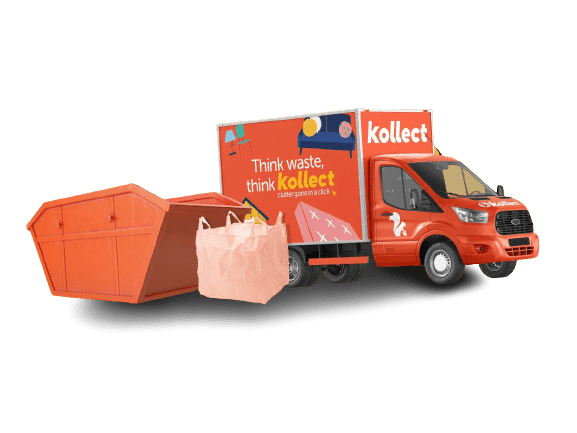
Kollect's two-person crew works nationwide, from €150, with next-day service available. Book online or call 01 697 2259 and we will confirm the price before we load a thing.
5. Skip vs Junk Removal — Which Is Better for a Rental Clearance?
This is the decision that catches most landlords out, and the honest answer is that it depends entirely on what is coming out of the property.
A skip is a container you fill yourself over a few days. It suits heavy, uniform, construction-type waste and jobs that generate material gradually. The trade-offs are that you or a contractor do all the lifting, you need somewhere legal to put it, and mixed loads that are not sorted properly cost more to process at the other end. Ireland's waste policy has been pushing hard on segregation and contamination for exactly this reason.
Junk removal is the opposite model: a crew arrives, loads everything in one visit and leaves with it. Nothing sits outside the property, nothing needs a permit, and the job is finished the same day. For a tenant's leftover belongings — which is furniture, soft goods, appliances and bags rather than rubble — that is almost always the right call.
| Your Situation | Best Option |
|---|---|
| Mixed furniture and general rubbish left behind | Junk removal |
| Renovation waste — rubble, tiles, plasterboard, timber | Skip hire |
| Large volume generated gradually over several days | Skip hire |
| You need it gone in a single visit | Junk removal |
| Tight access, city-centre street or apartment block | Junk removal or a skip bag |
| Tenant left a full house of belongings | Junk removal |
Access is the deciding factor more often than volume. Apartment blocks, terraced streets with residents' parking and anywhere with restricted loading make a skip awkward or impossible to place legally, while a van and a crew can work around almost anything. If you want the full cost-by-cost comparison, our skip vs junk removal guide sets both side by side.

Restricted access decides the method more often than volume does. A van and a crew can work where a skip cannot legally be placed.
6. How to Prepare for a Clearance — What Landlords Need to Do
Preparation takes about twenty minutes and it is what separates a clean, one-visit job from a return trip. Run through this before the crew is due.
Landlord Preparation Checklist:
- Photograph everything first. Walk each room and take date-stamped photos before anything is moved. It takes five minutes and it is your record of the property's condition at handover.
- Separate anything you are keeping. Appliances staying with the property, fitted items, anything of value. Put it in one room and mark the door, or tell the crew clearly on arrival.
- Check what can be donated. Clean, undamaged furniture and working appliances are often welcome at charity shops. The Society of St Vincent de Paul and Habitat for Humanity Ireland both accept quality donations, and Habitat's ReStore outlets resell home improvement materials to fund local projects.
- Sort out access. Keys or a code, a parking space for the van, and a heads-up on anything unusual — a gate that sticks, a lift with a weight limit, a shared entrance with restricted hours.
- Flag hazardous materials. If there is old paint, chemicals, gas cylinders or anything you suspect contains asbestos, say so when booking. The crew will advise on the correct disposal route rather than discovering it on the day.
- You do not need to be there. Leave instructions, and the crew sends photos of the empty property when the job is finished.
One Compliance Point Worth Knowing
Under Irish waste law, responsibility for waste does not simply end when someone drives away with it. If waste from your property is handed to an unpermitted operator and is later fly-tipped, the trail leads back to the property owner. It is a real risk, and it is entirely avoidable: use a provider holding a valid waste collection permit, and keep the paperwork.
For commercial landlords and anyone managing a portfolio, a waste transfer note is the document that closes that loop by recording what left the property and where it went. Kollect can provide one on request — just mention it when you book.
7. How Quickly Can a Rental Property Be Cleared in Ireland?
Speed is usually the whole point. A void period costs rent every week it runs, and a clearance sits right at the front of the turnaround, blocking the cleaner, the painter and the photographer behind it.
| What You Need | What to Expect |
|---|---|
| Standard turnaround | Most jobs completed within 24 hours of booking |
| Urgent jobs | Same-day availability in many areas |
| Weekend access | Seven-day availability, including Saturdays and Sundays |
| Coverage | Nationwide across all 26 counties |
| Portfolio landlords | One booking process and one standard used across every property |
In practice this means a property that is vacated on a Friday can be cleared on the Saturday, cleaned on the Sunday and photographed on the Monday. For anyone working to a tight re-letting window or a sale deadline, that difference is the whole margin.
8. Frequently Asked Questions
How much does end of tenancy clearance cost in Ireland?
Between €150 and €850 for most residential properties. A studio or 1-bed usually lands at €150–€250, a 2-bed apartment at €250–€400, a 3-bed house at €400–€600, and a large property with full contents at €600–€850. Pricing is based on the fraction of the van your load fills, and the figure is confirmed on site before loading starts.
How do I clear a rental property quickly?
Book a junk removal crew rather than organising it yourself. One booking covers the labour, the transport and the disposal, and most jobs are completed within 24 hours with same-day slots available in many areas. Have keys, parking and any keep-items sorted in advance and the visit itself usually takes an hour or two.
Do I need to be at the property during the clearance?
No. Plenty of landlords and property managers arrange access remotely, leave instructions on what stays and what goes, and receive photographs of the empty property once the work is finished. That is standard for anyone managing multiple units or living some distance from the property.
Is a skip or a junk removal service better for a rental clearance?
Junk removal for furniture, appliances and general belongings, because it is a single visit with all lifting included and no placement or permit issues. A skip makes more sense for renovation waste like rubble, tiles and plasterboard, or where material is generated gradually over several days. For tight access or apartment blocks, a skip bag is a flexible middle ground.
What can't be taken in an end of tenancy clearance?
Hazardous materials are excluded, which covers asbestos, clinical waste, industrial chemicals and solvents, pesticides and fuels such as gas cylinders. These require licensed specialist handling. Flag anything in that category when booking and you will be pointed to the right route — everything else, from wardrobes to white goods, is standard.
Can I get proof the waste was disposed of properly?
Yes. A waste transfer note records what was collected and where it was taken, and it can be provided on request. It is worth having, particularly for commercial landlords and letting portfolios, because responsibility for waste follows the property owner if it is later dumped illegally.
Conclusion
An end of tenancy clearance is one of the few parts of a property turnaround you can genuinely hand over entirely. Photograph the rooms, set aside anything you are keeping, sort access and flag anything hazardous, and the rest is somebody else's lifting. Volume-based pricing from €150, next-day availability, and every county covered means the clear-out stops being the thing that holds up the re-let. When you are ready, our household clearance team can have the property emptied and back in your hands.
Ready to get the property cleared?
Book online in minutes — no lifting, no hassle, all 26 counties covered. From €150 with next-day service available.